GLP-1, weight loss, and aesthetics: my honest opinion as a surgeon
More and more often, clients come to me with questions about GLP-1 medication such as Ozempic, Saxenda, or semaglutide. Not only people with obesity, but also women and men who mainly have an aesthetic desire: a tighter jawline, a more beautiful neck, less belly fat, or a better body contour. And sooner or later, the question almost always follows: "Do I have to lose weight with medication before I have something done?
As a surgeon and cosmetic doctor KNMG, I see the impact of these drugs up close. Not only medically, but also aesthetically. And that is precisely why I want to explain clearly, realistically, and without confusion in this blog what GLP-1 drugs do, what they do not do, and what that means for your face, body, and the results of cosmetic treatments. True health and aesthetics are not separate entities. They always go hand in hand.
GLP-1 supplies
In the Netherlands, 1 in 6 people are now obese, and the number of people with grade III obesity (BMI ≥ 40) is growing every year. This is not a cosmetic problem. It is a global health problem that literally affects hundreds of diseases: from diabetes to cardiovascular disease, from osteoarthritis to sleep apnea. That is why I find it understandable from a medical point of view that GLP-1 drugs have come to play such an important role in recent years. They work. And sometimes they change lives.
But that doesn't mean they're suitable for everyone. And certainly not that they're risk-free.
GLP-1 is an intestinal hormone that your body produces when you eat. The medicinal variants mimic this, only stronger and longer lasting. As a result, you eat less, feel full faster, and your stomach empties more slowly. For people who are severely overweight and have additional conditions, this can lead to enormous health benefits. That is the medical reality.
The aesthetic reality is more complex.
Do not overcompensate for lack of volume in the face
What I often see in my clinic, especially in people who lose weight quickly, is that the face changes before the body does. Fat does not disappear selectively. You lose it everywhere. Including in the cheeks. Including around the temples. Including in the lips and under the eyes. This results in what we now call the “Ozempic face”: sunken, more tired, older than someone actually is. Not because the medication does something “wrong,” but because the face simply loses volume quickly.
For me as a surgeon, one principle applies:
You should never overcompensate for volume in the face because someone is losing weight.
You should only make corrections once the weight is stable, otherwise you will be playing catch-up and creating an unnatural effect. Nobody wants that.
On the physical side, I see other patterns. Rapid weight loss can cause sagging skin on the abdomen, arms, and thighs. The skin's elasticity needs time, sometimes more time than people expect. The body changes, but sometimes there comes a phase in which someone feels less attractive than before losing weight. Not because it has failed, but because the skin, muscles, hormones, and nutrition are not yet in balance.
And this is precisely where realistic guidance is more important than ever.
What happens when you stop taking GLP-1?
GLP-1 is not a cosmetic shortcut. It is a medical treatment for a medical condition: obesity. Not for those extra pounds gained during vacation. Not as a quick fix. Not to “beat” cosmetic surgery. And certainly not without medical supervision.
The most underestimated risk is stopping the medication. Several studies show that approximately two-thirds to three-quarters of the weight lost returns within a year of stopping, unless intensive lifestyle coaching continues. This means that in many cases, GLP-1 is a long-term process. It is not a temporary injection, but a chronic treatment for a chronic condition. This awareness is often lacking.
In addition, I regularly see deficiencies developing: vitamin D, iron, sometimes even protein deficiency. Rapid weight loss reduces not only fat but also muscle mass, unless you eat and exercise carefully. And protein deficiency in particular has a huge impact on wound healing, scar quality, and recovery time. That's why, for me, the question is never just: “Can you lose weight?”
But above all: “Can you lose weight in a healthy way and stay healthy?”
Fillers are pointless if you are losing weight.
When we consider aesthetics, such as facelifts, liposuction, and body contouring, timing and stability are crucial. For major surgical procedures, I want the weight to be stable for at least 6 to 12 months. No decrease, no increase, no fluctuations. A body in motion heals unpredictably; a body in balance heals reliably. And reliable healing means beautiful healing.
The same applies to injectables: fillers in a face that is changing due to weight loss are pointless. You wait until a new balance has been achieved and only then do you look at what the face needs. Subtle volume, restoration of contours, support for skin structure. It can be beautiful, but timing is everything.
The best work I do, both surgical and non-surgical, always happens when someone has a stable, healthy, solid foundation. Sometimes that means losing weight first. Sometimes it means not losing weight for a while. Sometimes it means GLP-1. Sometimes it means a lifestyle program. Sometimes it means surgery, sometimes injectables, sometimes nothing yet.
Aesthetics such as facelifts, liposuction, and body contouring
When we consider aesthetics, such as facelifts, liposuction, and body contouring, timing and stability are crucial. For major surgical procedures, I want the weight to be stable for at least 6 to 12 months. No decrease, no increase, no fluctuations. A body in motion heals unpredictably; a body in balance heals reliably. And reliable healing means beautiful healing.
This works also
The same applies to injectables: fillers in a face that is changing due to weight loss are pointless. You wait until a new balance has been achieved and only then do you look at what the face needs. Subtle volume, restoration of contours, support for skin structure. It can be beautiful, but timing is everything.
Stability is important
The best work I do, both surgical and non-surgical, always happens when someone has a stable, healthy, solid foundation. Sometimes that means losing weight first. Sometimes it means not losing weight for a while. Sometimes it means GLP-1. Sometimes it means a lifestyle program. Sometimes it means surgery, sometimes injectables, sometimes nothing yet.
Looking beyond the mirror
My role as a surgeon is not just to look at the mirror. It is my job to see what is happening behind that mirror: the body, the story, the health, the expectations, and then to honestly say what is wise. Not what is quick. Not what is popular. What is best for your body, your face, and your future.
Aesthetics is not a sprint
Aesthetics is not a sprint. It's about the long term. And GLP-1 is only appropriate when it suits your health, your stability, and your body, not because it's a trend, but because it makes medical sense.
If you are unsure about the order of weight loss, GLP-1 medication, and aesthetic treatments, I invite you to come in for a consultation. Not to do anything immediately, but to gain clarity. Together, we will determine when your body is ready for aesthetics. When can aesthetics support your process, and when is it better to focus on your health first?
Because the best results always come from one thing:
good choices in the right order.
The Expert: Cosmetic Doctor & Surgeon
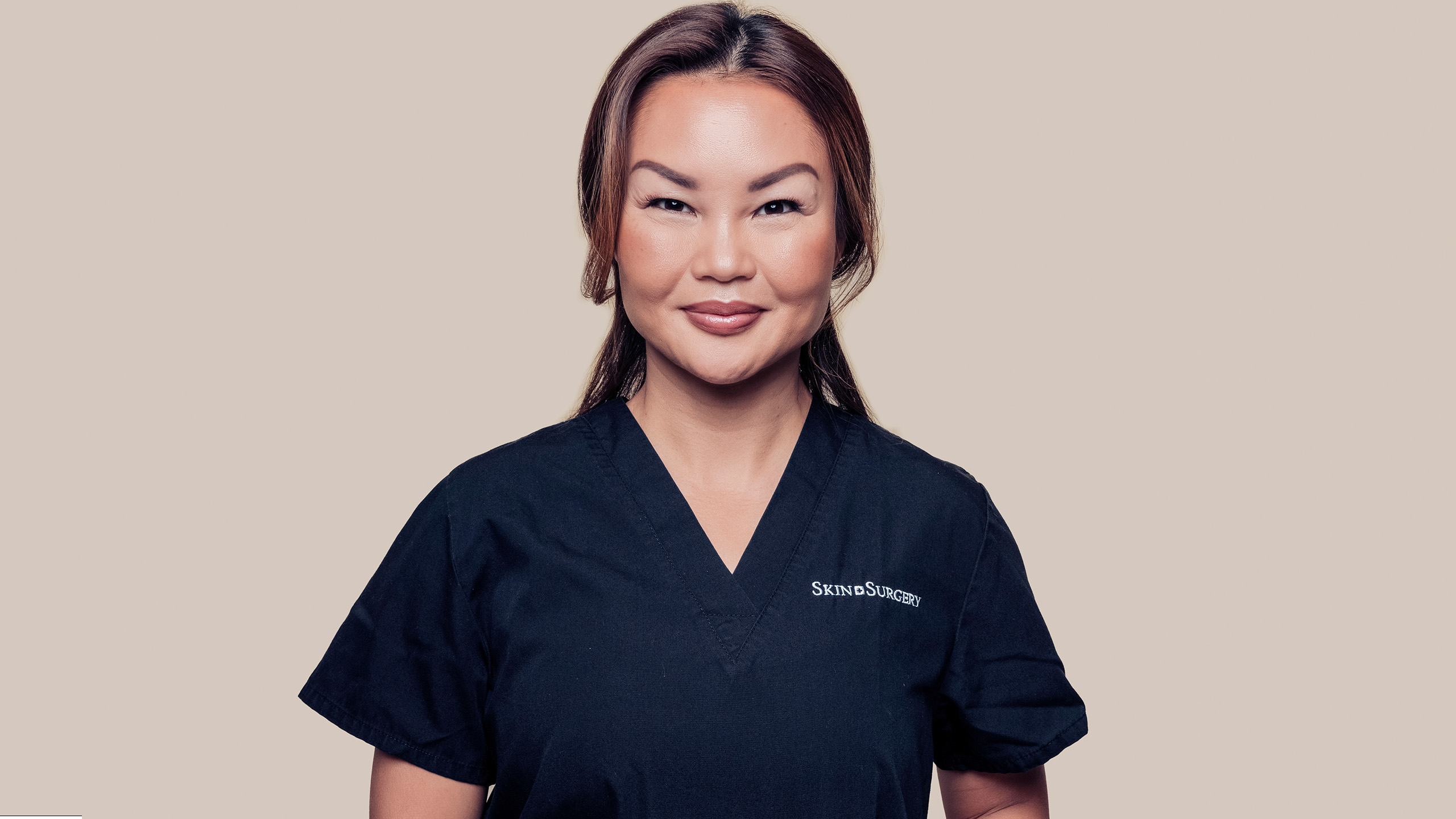
Dr Thanya Tha-In
KNMG Certified Cosmetic Physician & Surgeon
Dr. Tha-In has years of experience in facial surgery and has performed numerous procedures. She operates daily and knows exactly which treatment suits which needs or concerns.
SkinSurgery Bergschenhoek
Leeuwenhoekweg 4
2661 CZ Bergschenhoek
010- 310 56 20
SkinSurgery Tha Hague
Laan van Meerdervoort 677
2564 AC The Hague
070- 200 20 70
ALSO INTERESTING
More and more women are choosing a natural alternative to traditional hormone therapy. Read how bioidentical hormones at SkinSurgery help restore your hormonal balance safely and personally.


Labiaplasty Belgium: explained in 4 clear steps

Kris Jenner's SMAS facelift
GLP-1, weight loss, and aesthetics: my honest opinion as a surgeon
Zuid-Koreaanse skinboost: Rejuran binnenkort in Nederland bij Skin Surgery

NOVUMA CaHA biostimulator – natural skin firming without artificial volume