


 Ozempic, Mounjaro and the illusion of quick beauty“>
Ozempic, Mounjaro and the illusion of quick beauty
Why weight loss is not the same as health and does not automatically lead to better appearance
In recent years, agents such as Ozempic and Mounjaro have greatly increased in popularity. Whereas they were originally developed for the treatment of type 2 diabetes, they are now increasingly used with the goal of weight reduction. The action is pharmacologically sophisticated: these agents mimic the hormone GLP-1, reducing appetite, slowing gastric emptying and improving glucose regulation. The effect is clearly visible on the scales.
Yet another, more fundamental question is rarely asked:
What does this type of weight loss mean for body quality and facial appearance?
To understand this properly, it is relevant to reflect on the origins of this medication. The first GLP-1 analogues are based on exendin-4, a peptide isolated from the saliva of the Gila monster, a desert lizard that eats only a few times a year and barely experiences a sense of hunger. A fascinating biological mechanism, but also an important fact: these agents were developed for metabolic regulation in disease, not for optimising aesthetics or appearance.
In practice, I see that rapid, medication-driven weight reduction rarely happens selectively. The body loses fat not only where it is desired, but also in areas that actually contribute to a vital appearance. Subcutaneous fat in the face decreases, muscle mass can decrease and the skin loses tension and elasticity. This translates clinically to what is now known as the “Ozempic face”: a more sunken face, loss of volume in the midface and an accelerated ageing appearance. The body becomes lighter, but the quality of the tissue does not automatically improve along with it.
This creates a paradox that we encounter more and more often. First, volume is lost through medication, then this same volume is tried to be restored with fillers or fat grafting. This cycle raises an essential question: are we practising sustainable medicine, or are we correcting an effect we introduced ourselves? From a medical perspective, this does not feel like a logical or sustainable approach. Structural filling of medication-induced volume loss contributes limited long-term tissue quality and approaches symptom relief rather than a solution.
After all, a healthy appearance does not arise in isolation from the basics. It is the result of a body in balance, in which nutrition, exercise, hormonal regulation, sleep and reduced stress are mutually supportive. When weight loss is driven primarily pharmacologically, without including these fundamentals, the underlying system often remains unchanged. The body adapts, but the quality of that adaptation is fragile. Muscle mass can decrease, skin can lose vitality and metabolic balance remains fragile.
Within SkinSurgery, we make a conscious choice in this regard.
We do not offer treatments with GLP-1 agonists such as Ozempic or Mounjaro for aesthetic purposes. Not because these drugs have no effect, but because they are not in line with our vision of lasting quality and natural appearance. For us, aesthetics starts with a healthy body. We choose interventions that contribute to long-term balance, and avoid treatments that lead to a cycle of breakdown and recovery.
A beautiful appearance is not created by suppressing appetite alone. It comes about when the inside and outside are aligned. When a person feels strong in her body, it naturally translates to how she looks.
GLP-1 agonists undoubtedly have a valuable place within the treatment of obesity and metabolic disorders. But their increasing use in relatively mild obesity, with a primary aesthetic goal, calls for nuance and critical reflection. Not everything that gives weight loss contributes to health. And not everything that slims down improves appearance.
Therefore, the question is not just whether we can reduce weight. The real question is whether we can improve the quality of the body and therefore the way a person feels and becomes visible. That answer is less obvious than it seems at first glance.
Photo: New York Post
The Expert: Cosmetic Doctor & Surgeon
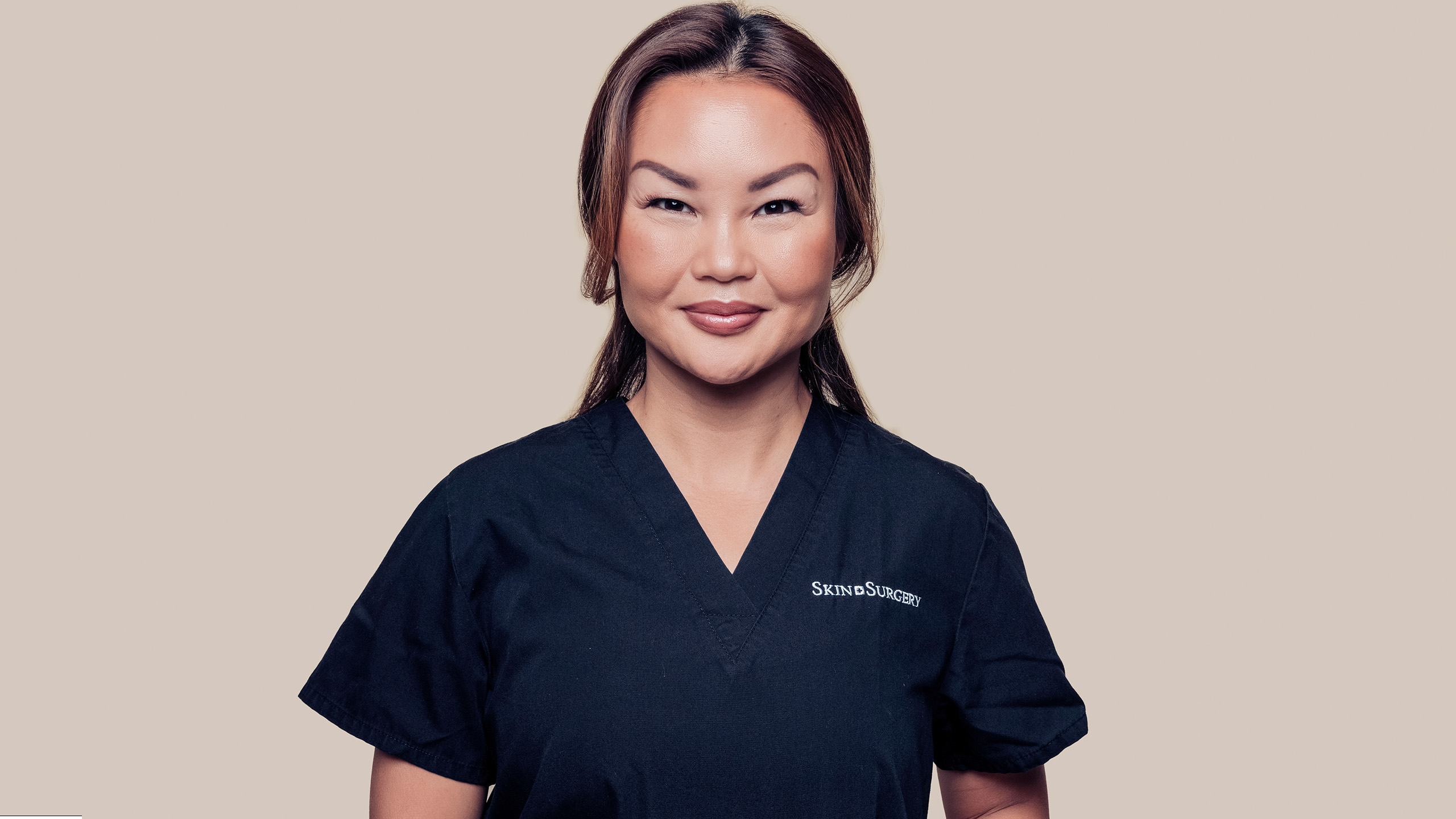
Dr Thanya Tha-In
KNMG Certified Cosmetic Physician & Surgeon
Dr. Tha-In has years of experience in facial surgery and has performed numerous procedures. She operates daily and knows exactly which treatment suits which needs or concerns.
SkinSurgery Bergschenhoek
Leeuwenhoekweg 4
2661 CZ Bergschenhoek
010- 310 56 20
SkinSurgery Tha Hague
Laan van Meerdervoort 677
2564 AC The Hague
070- 200 20 70
ALSO INTERESTING
The demand for skin improvement is shifting. Where volume and immediate correction used to be the main focus, more and more people are now looking for skin quality, recovery and a younger skin status in a natural way.


Botox is much more than just frown lines, foreheads and crow's feet.

Profhilo or Radiesse: which treatment is right for your skin?

Cosmetic treatments: why more and more people are open about their choices
Why do men frown more often? The cause of a deep frown and what you can do about it

10 treatments to shine on your wedding day
